
“For anyone considering a career in nursing, it’s important to understand that this profession requires passion, resilience, and a genuine commitment to serving others. Nursing is demanding, but deeply rewarding. […] If you are dedicated, willing to work hard, and motivated by helping people, nursing can be an incredibly fulfilling path.”
Emma Cuenca, DNP, Director of UCLA Nursing’s Bachelor’s and Master’s Entry to Clinical Nursing (MECN) Prelicensure Programs
In most healthcare settings, registered nurses (RNs) are the first medical providers patients have contact with. Nurses can assess patients’ conditions, take vitals, provide emotional support, and assist with procedures. Not only are they critical to the healthcare field because of their support role for doctors, but they are the most trusted profession in the US for the past 20 years, according to Gallup (2025).
In the US, more than three million nurses are employed in various fields. Approximately 59 percent of nurses work in hospitals to provide patients care, assist with surgeries, and administer treatments. Nurses are also employed by clinics, outpatient centers, long-term care facilities, government agencies, and schools.
A nursing license can be obtained with just an associate of science in nursing and passing state-required exams. However, most employers prefer nurses to have earned at least a bachelor of science (BSN) in nursing. Numerous specializations in nursing can be earned through additional education, such as a master’s (MSN) or doctorate (DNP), and further examinations.
Registered nurses earn, on average, $98,430 per year (Bureau of Labor Statistics May 2024). The profession is expected to grow 5 percent nationally between 2024 and 2034, adding an estimated 166,100 new jobs. This growth is largely driven by an aging population’s increased demand for health care services and the increasing need for long-term care facilities.
To learn more about registered nurses and how to become one, read on.
Meet the Expert: Emma Cuenca, DNP, RN, CCRN-K, CNS

Dr. Emma Cuenca is an associate adjunct professor at the UCLA Joe C. Wen School of Nursing and the director of UCLA Nursing’s Bachelor’s and Master’s Entry to Clinical Nursing (MECN) prelicensure programs. In this role, she helps shape prelicensure nursing education and supports the preparation of new nurses for clinical practice.
Dr. Cuenca earned her DNP from the University of San Diego and her MSN (as a clinical nurse specialist in gerontology) from California State University, Dominguez Hills. Her professional background includes long-standing involvement with organizations such as the American Association of Colleges of Nursing (AACN) and the National Clinical Nurse Specialist Association (NCNSA). She has been recognized for contributions to evidence-based practice and nursing leadership, including honors from Kaiser Permanente Southern California and the Philippine Nurses Association of Southern California, and she was selected as one of 50 Fellows in the American Association of Colleges of Nursing’s Elevating Leaders in Academic Nursing (ELAN) program in 2024.
HealthcareDegree.com: What’s something you wish the public understood about registered nurses?
Dr. Cuenca: I wish the public understood that earning the title of registered nurse requires far more than compassion—it requires rigorous academic and clinical preparation. To hold a nursing license, we complete extensive training grounded in science, mathematics, chemistry, microbiology, and critical thinking. We must meet mandated hours of theory and hands-on clinical practice, and we demonstrate our competence and safety through a national licensing examination. When someone is a registered nurse, it means they have proven they can deliver safe, skilled, and evidence-based care.
Many people see nurses primarily as helpers who follow doctors’ orders, but nursing is its own distinct profession requiring extensive scientific knowledge. RNs are constantly making critical assessments, catching potential problems before they escalate, and advocating for patients. They’re often the ones who notice the subtle changes that save lives, a slight shift in vital signs, an unusual response to medication, or early signs of deterioration.
HealthcareDegree.com: Do you have any advice for someone interested in becoming a registered nurse?
Dr. Cuenca: For anyone considering a career in nursing, it’s important to understand that this profession requires passion, resilience, and a genuine commitment to serving others. Nursing is demanding, but deeply rewarding. Strong communication skills, sound decision-making, and the ability to navigate conflict are essential.
Equally important are ethical judgment and a solid moral compass—qualities that guide us in advocating for patients and their families. If you are dedicated, willing to work hard, and motivated by helping people, nursing can be an incredibly fulfilling path.
HealthcareDegree.com: What does the future of this role look like to you?
Dr. Cuenca: The future of nursing is dynamic and continually evolving. As healthcare policies, technologies, and best practices change, nurses must remain active voices in discussions that shape patient safety, workplace conditions, and professional development. Lifelong learning is no longer optional—it’s essential. With the rise of artificial intelligence and new digital tools, nurses will need to be innovative, research-driven, and firmly grounded in evidence-based practice. Our role will continue to expand, and our leadership will be crucial in ensuring high-quality care for future generations.
The RN of the future, with an advanced degree, is a highly educated, autonomous clinician whose deep scientific knowledge and advanced assessment skills drive life-saving decisions every day. Equipped with doctoral education and expanding scopes of practice, these nurses are not assistants to medicine but essential, interdisciplinary collaborators. Their ability to interpret complex data, detect the earliest signs of deterioration, and advocate fiercely for patients places them at the very center of modern healthcare.
As professionals, they form the backbone of a system that increasingly relies on their expertise, insight, and unwavering commitment to human well-being.
Meet the Expert: Allen Cadavero, PhD, RN, CCRN-K
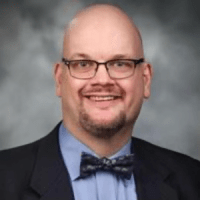
Dr. Allen Cadavero is an assistant professor at Duke University School of Nursing. He earned his BSN from the University of North Carolina at Greensboro, his MSN in nursing education from Duke, and a PhD in nursing education from Villanova University.
Prior to joining the full-time faculty, Dr. Cadavero worked as a clinical instructor in Duke’s Accelerated BSN program. He brings more than 20 years of clinical experience in critical care, medical-surgical nursing, perioperative nursing, home health, and wound management. Most recently, he worked as a cardiothoracic critical care nurse in the Duke Heart Center.
HealthcareDegree.com: What is something that you wish the public understood about registered nurses?
Dr. Cadavero: Often, people think that nurses are doctors’ assistants, but nursing is a whole separate profession, and we collaborate with medicine. We are highly skilled, highly trained professionals set apart by our clinical expertise, critical thinking, and compassion.
Nurses are truly advocates who will empower a patient to care for their health and wellness and work to optimize a patient’s health and wellness, whether that’s at an office visit, in the community, in an acute care setting, or in post-hospital settings. A nurse is the one who has the most intimate connection with a patient and who spends the most time with a patient, and we are continually named as the most trusted profession.
HealthcareDegree.com: Do you have any advice for someone interested in becoming a registered nurse?
Dr. Cadavero: You’re going to be working with not only patients, but their families. We consider families and loved ones a valuable part of patient care, and we consider their communities and cultures as well. And that aspect combines with the rigorous scientific preparation nurses must have: anatomy, physiology, biology, and microbiology, together with social sciences like sociology and psychology. So it’s a profession that is both very rigorous and very holistic.
We’re managing the system to deliver the care for the patient, but we don’t want to dilute face time with the patient, because we know that when the patient has maximum time with the nurse, they have amazing outcomes. So nurses need to have extremely developed time management skills.
You will always be learning. You’ll have to [obtain] licensure; you’ll have to keep up your licensure. There will be certifications; there will be competencies, and nursing is always evolving, so that you will constantly develop, learn, and adapt.
HealthcareDegree.com: What does the future of the RN role look like to you?
Dr. Cadavero: Our role is expanding from the traditional bedside care. We’re constantly looking and striving for new models of care, especially when healthcare experiences disruptions and when resources are limited. In technology, informatics, and leadership, we are always looking to evolve to maximize impact. We know we can do things better and more efficiently and coordinate with others across healthcare, and we know we have to break out of the disease model of healthcare and move to a wellness empowerment model, which nurses are poised to lead.
After the pandemic, we have seen a shift to where all generations are using telehealth, which opens up a lot of possibilities for new care models. And with AI, we can exponentially reduce the things that slow us down and become more efficient. And hopefully, AI will be able to provide more custom data analysis than what we can do with our current intake forms and systems, so that we will be able to flag patients for risks or treatments that we may otherwise miss and help us address complex medical situations that our current systems aren’t built for.
The hope is that it will drive down healthcare costs and make our systems much more efficient so that nurses can get more of that vital face time with patients.
Registered Nurse Specializations & Degree Types
There are three main degrees for registered nurses (RN): an associate of science in nursing (ASN), a bachelor’s of science in nursing (BSN), or a master’s of science in nursing (MSN). The MSN — as well as a fourth degree, the doctor of nursing practice (DNP) — can lead to advanced practice roles. Most employers prefer that RNs have obtained at least a bachelor’s degree.
There are numerous specializations RNs can pursue, including:
- Neonatal
- Oncology
- Geriatric
- Labor and Delivery
- Midwife (MSN or DNP)
- Critical Care
- Dialysis
- Trauma
- Psychiatric
- Public Health
- Nurse Practitioner (MSN or DNP)
- Nurse Anesthetist (MSN or DNP)
Some of these specializations require additional education and certification.
Admissions Requirements for Registered Nurse Programs
Associate of science in nursing (ASN) programs require that prospective students have completed high school or a GED. Often, these programs require work experience in a clinical care setting, particularly if the program is offered online.
Additionally, many programs require prerequisite courses in anatomy, science, and math. Submitting a resume, references, and a letter of intent along with an online application is typical. More competitive programs may require students to attend on-campus interviews as well.
Bachelor’s (BSN) and master’s (MSN) programs have additional requirements, including test scores, interviews, a personal statement, and proof of qualifying coursework.
Registered Nurse Program Accreditation
There are two main accrediting bodies for nursing programs: the Commission on Collegiate Nursing Education (CCNE) and the Accreditation Commission for Education in Nursing (ACEN).
While ACEN accredits all levels of programs, the CCNE only accredits programs issuing bachelor’s degrees or higher. Both accreditation agencies ensure programs meet national standards for nursing education. Students should ensure the program they enroll in is accredited as it guarantees a minimum standard of educational quality. In addition, transferring credits to other programs and the ability to pursue further education is easier.
On-Campus Registered Nurse Degree Programs
University of California, Los Angeles – Joe C. Wen School of Nursing
The UCLA Joe C. Wen School of Nursing was established in 1949. Since then, they have added several degree programs, including a bachelor of science in nursing, a master of science in nursing, and a doctor of nursing practice. The BSN program is a traditional, on-campus program that starts during a student’s freshman year. A limited number of students are admitted as junior-year transfers.
Research is a primary emphasis of this program, and all students will be able to participate in ongoing projects on campus. Graduates of the BSN program are eligible to sit for the NCLEX exam and work as entry-level nurses. This program also prepares students for additional studies, such as an MSN or DNP, should a student wish to pursue additional education.
- Location: Los Angeles, CA
- Duration: Four years
- Accreditation: Commission on Collegiate Nursing Education (CCNE)
Duke University – School of Nursing
The master of nursing at Duke University School of Nursing is a direct-entry pre-licensure program designed for individuals who hold a bachelor’s degree in a field other than nursing and want to begin a career as a registered nurse. The MN curriculum builds on students’ previous academic and professional experience and prepares graduates to sit for the NCLEX-RN and enter clinical nursing practice with preparation in evidence-based care, health equity, and patient advocacy.
The degree is delivered on campus over four full-time semesters and includes hands-on clinical experiences alongside high-fidelity simulation and expert faculty mentorship. Upon completion, graduates are eligible for RN licensure and are positioned for diverse roles in acute, community, and specialty care settings, with the foundation to pursue advanced graduate study if desired.
- Location: Durham, NC
- Duration: 16 months
- Accreditation: Commission on Collegiate Nursing Education (CCNE)
University of Illinois – College of Nursing
Hands-on experience is at the core of the traditional bachelor of science in nursing (BSN) at the University of Illinois College of Nursing. With seven clinical rotations, students can gain experience in various clinical settings, including surgery, mental health, pediatrics, community health, and acute care.
This program can be completed in four semesters over the course of two years. Students are required to complete 63 credits of coursework, including classes such as concepts in pharmacology, nursing care in mental and behavioral health, and nursing care for children and families. Applications for admission are due once per year in January. Students must have completed at least 57 credits of college coursework in specific courses at UIC or another institution.
- Location: Chicago, IL
- Duration: Two years or more
- Accreditation: Commission on Collegiate Nursing Education (CCNE)
Emory University – Nell Hodgson Woodruff School of Nursing
There are several education paths for aspiring nurses at Emory University Nell Hodgson Woodruff School of Nursing. These include a bachelor’s of science in nursing, an accelerated bachelor’s, a master’s of science in nursing, a doctor of nursing practice, and a nurse anesthesia degree. Incoming freshmen can enroll in the on-campus bachelor of science degree to complete their prerequisite coursework. Then, they must apply to the nursing school for their junior and senior years.
Admission requirements for the BSN program at Emory include prerequisite coursework in chemistry, biology, math, and anatomy and physiology. Since admissions are competitive, students should consider completing the recommended prerequisite coursework in microbiology and nutrition.
- Location: Atlanta, GA
- Duration: Four years
- Accreditation: Commission on Collegiate Nursing Education (CCNE)
University of Pennsylvania – School of Nursing
The School of Nursing at the University of Pennsylvania is ranked number two in the world, according to a survey by QS World University. In addition to outstanding education, students in the bachelor of science nursing program have access to all the amenities Penn State offers, such as student clubs, dining facilities, residential housing, athletics, and study abroad.
Clinical rotations for nursing students happen at various locations, including the two teaching hospitals affiliated with the school. The BSN is a direct entry program, so incoming freshmen will start their nursing studies their first semester. This school also offers a nursing and healthcare management coordinated dual-degree for students looking to work on the administrative side of healthcare.
- Location: Philadelphia, PA
- Duration: Two years
- Accreditation: Commission on Collegiate Nursing Education (CCNE)
Online or Hybrid Registered Nurse Degree Programs
Excelsior College offers one of the few fully online associate of science in nursing (ASN) programs. Students in this program can complete their coursework at their own pace while still receiving support from faculty and advisors via email or phone calls. Graduates of this program can seamlessly transition to the BSN program also offered here if they wish to pursue more education.
This degree has a strong emphasis on decision-making, holistic care, advocacy, and professionalism. This program is designed for students who already have experience in a clinical setting, so verification of clinical experience is required to be eligible for admission. This can be in a clinic, as a paramedic, or even in the military.
- Location: Albany, NY
- Duration: Two years
- Accreditation: Accreditation Commission for Education in Nursing (ACEN)
Utah Valley University – College of Health and Public Service
Students who wish to pursue a BSN will find the program at Utah Valley University very flexible. Upon obtaining an ASN degree on campus or through another institution, students can complete their BSN degree online, on campus, or a hybrid of the two. Clinical hour requirements can be fulfilled in the student’s own community, allowing students to complete their bachelor’s without having to relocate.
Graduates of this program will have strong critical thinking skills and quick decision-making abilities to provide optimal health outcomes for patients. Required coursework includes palliative care in nursing, clinical assessment and reasoning, and nursing in the global perspective.
Admissions are open in the spring and fall. Prospective applicants must submit transcripts with proof of prerequisite coursework, proof of immunizations, and letters of recommendation.
- Location: Orem, UT
- Duration: Two years
- Accreditation: Accreditation Commission for Education in Nursing (ACEN)
Licensed practical nurses (LPNs) who wish to become RNs can complete the hybrid associate of science in nursing program at Sampson Community College. Most classes are offered online, allowing students to complete their coursework on their own schedule. Students will have to travel to campus for orientation and tests.
To be eligible for admission to this program, applicants must be licensed LPN in North Carolina or a compact state. Other admission requirements include at least 2,000 hours of work experience as an LPN, CPR certification, prerequisite coursework, and proof of computer literacy through recent coursework or an assessment. Only ten students are admitted to this program each year.
- Location: Clinton, NC
- Duration: One year
- Accreditation: Accreditation Commission for Education in Nursing (ACEN)
Rasmussen University – School of Nursing
In just 21 months, students can earn an associate’s degree in nursing (ADN) through the Rasmussen University School of Nursing. This distance learning program offers the majority of its coursework online. Students must travel to campus for lab simulations and attend in-person clinical experiences. Required coursework students complete include nursing care for older adults, behavioral health nursing, and maternal-child nursing.
This program is offered at 16 campuses in five states, affording students much flexibility. With no prerequisite coursework and no waiting lists on several campuses, admission to this program is relatively easy. Rasmussen offers a variety of other online nursing programs, including BSN, MSN, and DNP programs.
- Location: Offered on 16 campuses in Minnesota, Illinois, Kansas, Florida, and Wisconsin
- Duration: 21 months (18 months for LPNs)
- Accreditation: Accreditation Commission for Education in Nursing (ACEN)
The Ohio State University – College of Nursing
Registered nurses who want to earn their bachelor’s in nursing can complete their studies online through The Ohio State University College of Nursing. Highly quality coursework, outstanding clinical rotations, and top-tier faculty have landed this program at number four in the nation, according to US News & World Report. Other features of this program include a low student-to-teacher ratio, an emphasis on evidence-based practices, and the option to complete studies on a full-time or part-time basis.
Required coursework for this program includes classes such as science of human nutrition, cultural competence in health care, and health care informatics. Candidates for admission to this program must already be registered nurses, have completed prerequisite coursework, hold an associate’s degree, and reside in an authorized state.
- Location: Columbus, OH
- Duration: Two years
- Accreditation: Accreditation Commission for Education in Nursing (ACEN)
How Long Does it Take to Become a Registered Nurse?
Becoming a registered nurse takes two to four years after completing high school. The timeline varies based on the degree type chosen and the course of study.
How To Become a Registered Nurse – Step-by-Step Guide
Step 1: Graduate from High School or Complete a GED (Four Years)
To enroll in a nursing program, students must first graduate from high school or complete a GED. Nursing programs can be competitive, so students should strive to maintain a high GPA and take challenging courses such as advanced placement classes. Sitting for AP tests can also earn students college credit while still in high school, decreasing the course load required to complete a degree.
Step 2: Complete a Nursing Program (One to Four Years)
The quickest way to become an RN is to complete an associate of science in nursing. These programs can be completed in as little as a year if it is an accelerated format, but typically take two years.
Many who pursue a nursing career choose to complete a bachelor of science in nursing (BSN), which takes four years. Students should ensure their program is accredited by the CCNE or ACNE to guarantee it meets a specific quality.
Step 3: Pass State Required Test (Timelines Vary)
Upon completing an ASN or BSN, students should contact their state’s board of nursing to determine what tests are required to apply for a nursing license. While requirements vary by state, all states require some form of a test. The most common test is the National Council Licensure Examination (NCLEX) offered by the National Council of State Boards of Nursing (NCSBN).
Step 4: Apply for State Licensure (Timelines Varies)
Once all the state nursing regulatory board licensing requirements have been met, prospective nurses can apply for licensure. For some states, licensing is only valid in the state of issue. However, some states offer reciprocity through the Nurse Licensure Compact (NLC).
Step 5: Obtain Entry-Level Work (Timelines Vary)
Newly licensed RNs can find entry-level work in hospitals, clinics, long-term care facilities, and government agencies. Sites such as Nursing Job Finder and Indeed have extensive lists of jobs perfect for brand-new RNs.
What Do Registered Nurses Do?
Registered nurses are the backbone of clinics, hospitals, and care facilities. They perform much of the patient care, offer emotional support, and provide advice to patients and their families. While job duties vary based on the location of employment, general job duties of nurses include:
- Administering medications and vaccines per doctor’s orders
- Assessing a patient’s condition
- Taking patients’ vital signs
- Keeping patient medical records
- Observing patients
- Assisting with medical procedures or surgery
- Collaborating with doctors, social workers, and clinic or hospital staff
- Educating patients and families on medical conditions
- Providing patients with instructions for follow-up care or at-home treatment
- Performing diagnostic tests
Registered Nurse Certifications & Licensure
Registered nurses are required to be licensed in all 50 states. Licenses are issued by each state’s nursing regulatory body, and requirements for licensure vary.
There are over 180 different certificates nurses can earn in everything from pediatric care to emergency medicine to gerontology. Some of these certifications require additional education, such as becoming a nurse-midwife or nurse practitioner. Other certifications can be earned through test-taking or work experience.
How Much Do Registered Nurses Make?
The Bureau of Labor Statistics does not differentiate nurse salaries based on specialization. The 3,282,010 registered nurses in the US earn $98,430 per year on average (BLS May 2024). As of January 2026, the latest available percentiles for wages were:
- 10th percentile: $66,030
- 25th percentile: $78,610
- 50th percentile (median): $93,600
- 75th percentile: $107,960
- 90th percentile: $135,320
Registered Nurse Career Alternatives
Here are some alternatives to a career as a registered nurse:
Become a Nurse Practitioner
Nurse practitioners are registered nurses who have completed additional education and training. In many states, they can provide patients the same level of care as a physician, including prescribing medications. Some nurse practitioners are primary care providers, while others are nurse anesthetists, midwives, or oncology care providers.
- Typical Education: Doctor of nursing practice (DNP)
- Licensing or Certifying Organization: American Academy of Nurse Practitioners (AANP)
Become a Registered Respiratory Therapist
Breathing therapy and support for clients with respiratory diseases, disorders, or injuries are provided by registered respiratory therapists. They provide diagnostic tests to evaluate lung function, provide chest physiotherapy, and administer prescribed medications. Also, they can intubate patients and monitor ventilation settings.
- Typical Education: Diploma or associate’s
- Licensing or Certifying Organization: National Board for Respiratory Care (NBRC)
Become a Physician Assistant
Physician assistants are medical care providers who can perform many of the same duties as physicians. Unlike doctors, physician assistants do not attend medical school. Rather they earn a master’s of physician assistant studies (MPAS), a master’s of health services (MHS), or a master’s of medical science (MMSc). These degrees only take approximately three years to complete.
- Typical Education: Master’s of physician assistant studies (MPAS), a master’s of health services (MHS), or a master’s of medical science (MMSc)
- Licensing or Certifying Organization: American Academy of Physician Assistants (AAPA)

Kimmy Gustafson
WriterAt HealthcareDegree.com, Kimmy Gustafson has delivered in-depth and insightful articles since 2019, aiding prospective students to navigate the complexities of choosing the right healthcare degree. Her recent work includes topics such as the ethics of gene editing and physician assistant’s fight for autonomy.
Kimmy has been a freelance writer for more than a decade, writing hundreds of articles on a wide variety of topics such as startups, nonprofits, healthcare, kiteboarding, the outdoors, and higher education. She is passionate about seeing the world and has traveled to over 27 countries. She holds a bachelor’s degree in journalism from the University of Oregon. When not working, she can be found outdoors, parenting, kiteboarding, or cooking.

Matt Zbrog
WriterMatt Zbrog is a writer and researcher from Southern California. Since 2018, he’s written extensively about trends within the healthcare workforce, with a particular focus on the power of interdisciplinary teams. He’s also covered the crises faced by healthcare professionals working at assisted living and long-term care facilities, both in light of the Covid-19 pandemic and the demographic shift brought on by the aging of the Baby Boomers. His work has included detailed interviews and consultations with leaders and subject matter experts from the American Nurses Association (ASCA), the American College of Health Care Administrators (ACHCA), and the American Speech-Language Hearing Association (ASHA).